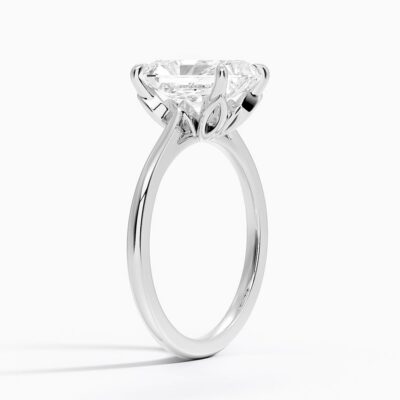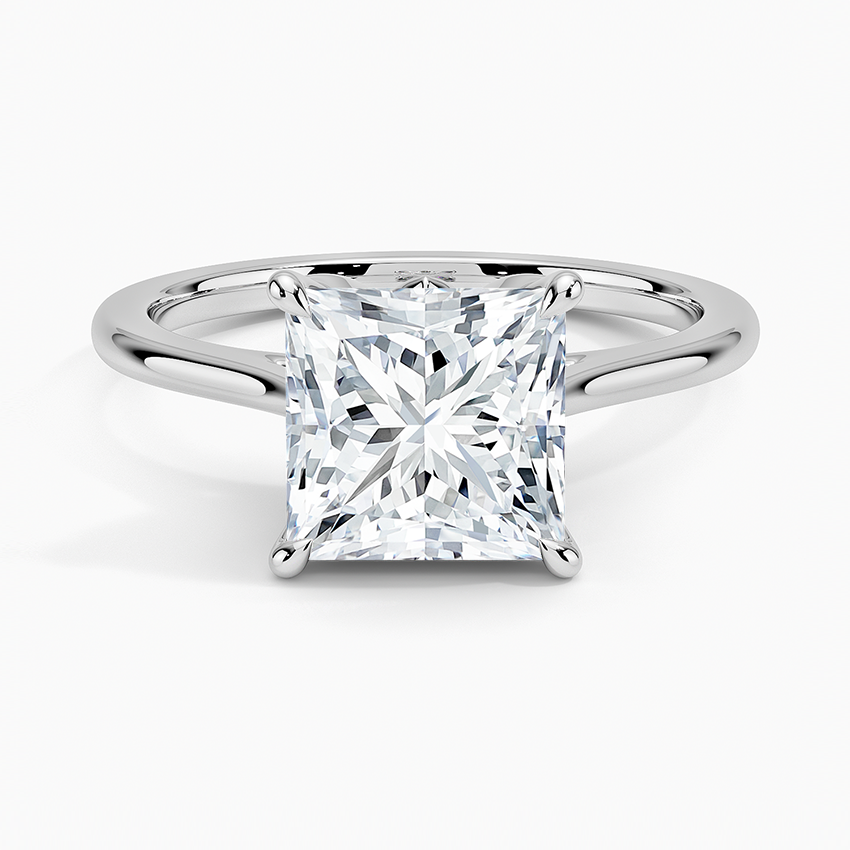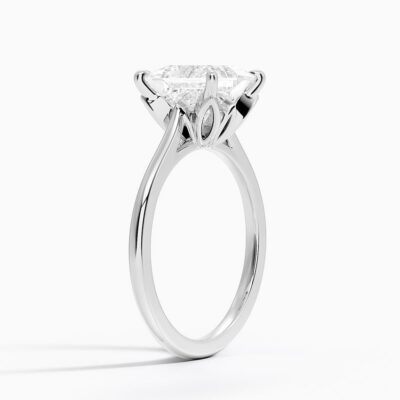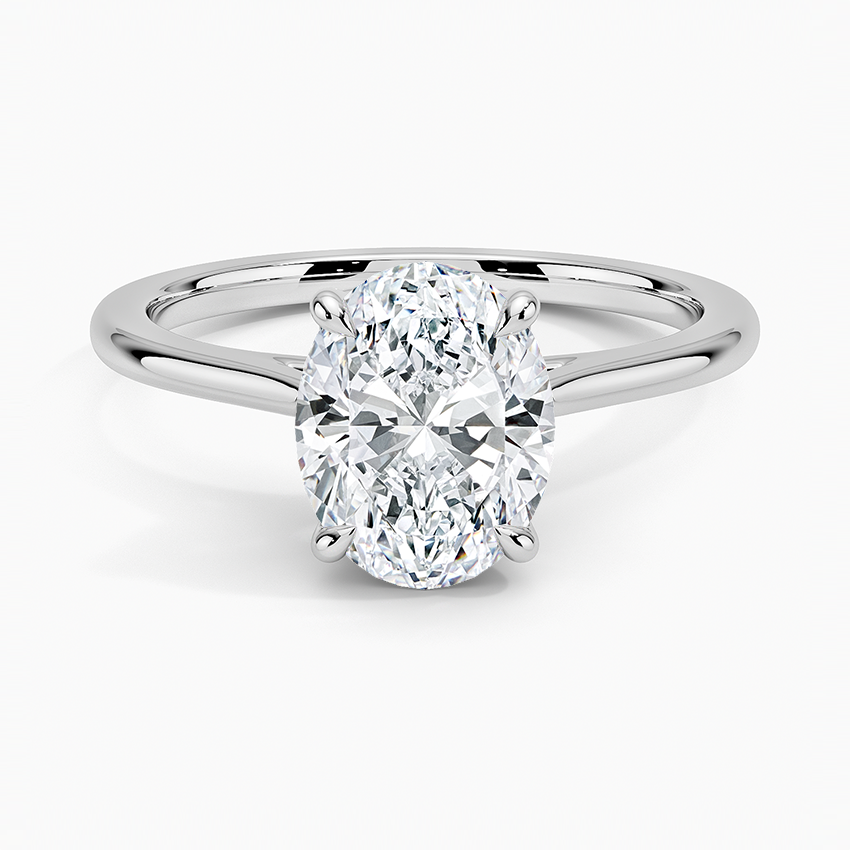
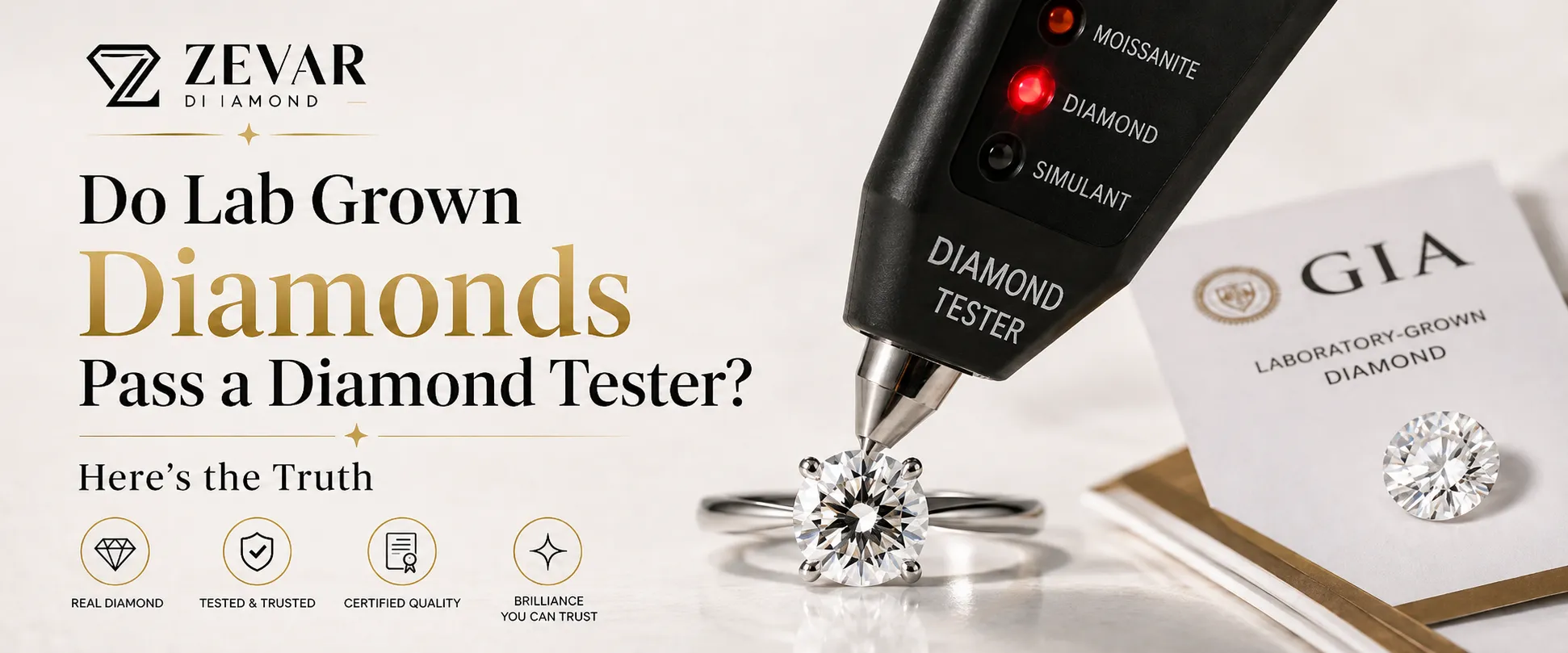
You found a beautiful lab grown diamond, but now you are wondering: will it pass a diamond tester?
It is a fair question. Many buyers want to know if a lab grown diamond will test as a real diamond or if a jeweler’s tester will identify it as fake.
The short answer is yes, most lab grown diamonds do pass a standard diamond tester because they are real diamonds.
They have nearly the same chemical, optical, and physical properties as natural diamonds.
The main difference is not what they are made of.
The main difference is how they are created.
A natural diamond is formed underground over billions of years.
A lab grown diamond is created in a controlled laboratory environment using advanced technology. Both are diamonds, but their origin is different.
That is why a regular diamond tester can usually confirm that a lab grown diamond is a diamond, but it usually cannot tell whether the diamond is natural or lab grown.
In this guide, we’ll explain how diamond testers work, why lab grown diamonds pass most testers, how jewelers identify lab grown diamonds, and what buyers should look for before purchasing.
Quick Answer: Do Lab Grown Diamonds Pass a Diamond Tester?
Yes, lab grown diamonds usually pass a standard diamond tester.
Most basic diamond testers are designed to check whether a stone behaves like a diamond.
They often test properties such as thermal conductivity, which means how well the stone conducts heat.
Since lab grown diamonds are real diamonds, they usually respond like natural diamonds on these testers.
However, a regular diamond tester usually cannot confirm whether a diamond is natural or lab grown.
To separate lab grown diamonds from natural diamonds, jewelers and gemological laboratories use more advanced tools.
These may include spectroscopy, fluorescence testing, advanced screening machines, laser inscription checks, and professional grading reports from trusted labs.
So, if someone asks whether lab grown diamonds pass a diamond tester, the answer is:
Yes, they usually pass because they are real diamonds.
But a basic tester cannot reliably tell you whether the diamond was grown on Earth or in a lab.
What Does a Diamond Tester Actually Test?
A diamond tester is a small device used to help identify whether a stone is likely to be a diamond.
Most basic diamond testers do not test the full history or origin of the stone.
Instead, they check certain physical properties that diamonds are known for.
Common diamond testers may check:
- Thermal conductivity
- Electrical conductivity
- How the stone reacts compared to diamond simulants
- Whether the stone behaves like diamond or another material
A basic diamond tester is mainly trying to answer one question:
Is this stone a diamond or not?
It is not usually designed to answer:
Is this diamond natural or lab grown?
That difference matters.
A standard tester can help separate diamonds from some fake-looking stones, but it is not enough to confirm origin.
This is why a lab grown diamond can pass a tester even though it was not mined from the earth.
Why Lab Grown Diamonds Pass Most Diamond Testers
Lab grown diamonds pass most diamond testers because they are made of carbon, just like natural diamonds.
They are not imitation diamonds.
They are not glass.
They are not cubic zirconia.
They are not moissanite.
A lab grown diamond has the same crystal structure as a natural diamond.
This gives it many of the same properties, including hardness, brilliance, fire, and heat conductivity.
Because of this, a standard tester will usually read a lab grown diamond as a diamond.
This is one of the most important points buyers should understand:
A lab grown diamond passing a diamond tester does not mean it is natural. It means it is a diamond.
The tester is confirming the material, not the origin.
Can a Diamond Tester Tell the Difference Between Lab Grown and Natural Diamonds?
In most cases, no.
A regular diamond tester cannot reliably tell the difference between lab grown diamonds and natural diamonds.
Since both are real diamonds, they can behave very similarly on basic testers.
This is why jewelers and gem labs use advanced testing methods to identify origin.
To confirm whether a diamond is natural or lab grown, professionals may use:
- Advanced diamond screening devices
- Spectroscopy
- Fluorescence testing
- Magnification
- Growth pattern analysis
- Laser inscription checks
- Professional grading reports
These tools can detect growth features and trace elements that are not visible to the naked eye and cannot be identified by a simple tester.
So, if someone uses a basic diamond tester and says, “This passed, so it must be natural,” that is not always correct.
It may be a natural diamond, or it may be a lab grown diamond. More advanced testing is needed to know for sure.
Do Lab Grown Diamonds Test as Fake?
No, lab grown diamonds do not test as fake because they are not fake diamonds.
This is where many buyers get confused.
A fake diamond is usually a diamond simulant. A simulant is a stone that looks like a diamond but is not chemically the same as a diamond.
Common diamond simulants include:
- Cubic zirconia
- Moissanite
- White sapphire
- Glass
These stones may look similar to diamonds, but they are different materials.
Lab grown diamonds are different.
They are real diamonds created in a lab.
They have the same basic chemical structure as natural diamonds, which is why they usually pass a diamond tester.
The better way to think about it is this:
A lab grown diamond is not a fake diamond. It is a real diamond with a different origin.
Lab Grown Diamond vs Moissanite on a Diamond Tester
Lab grown diamonds and moissanite are often confused, but they are not the same.
A lab grown diamond is a real diamond.
Moissanite is a different gemstone.
Moissanite can look similar to a diamond because it has strong sparkle and brilliance, but it is made from silicon carbide, not carbon.
Because of this, it has different properties from diamond.
Some older diamond testers, especially basic thermal testers, may mistake moissanite for diamond because moissanite can conduct heat in a similar way.
This is why many modern testers use both thermal and electrical conductivity to help separate diamond from moissanite.
A lab grown diamond, however, passes because it is actually diamond.
This is why certification matters.
A tester can be helpful, but a grading report gives you more reliable information about the stone.
Why Some Diamond Testers Give Confusing Results
Most lab grown diamonds will pass a standard diamond tester, but sometimes testers can give confusing or inconsistent results.
This can happen for several reasons.
The tester may be low quality.
The stone may be too small.
The diamond may be dirty. The setting may make it hard for the tester tip to touch the stone properly. The person using the tester may also apply the device incorrectly.
Other factors can include:
- The quality of the tester
- Whether the tester checks thermal or electrical conductivity
- The size of the diamond
- The setting style
- Dirt, oil, or residue on the stone
- Whether the stone is loose or mounted
- The type of diamond being tested
This is why you should not rely on a diamond tester alone for an important purchase.
A tester can be useful, but it is not the final proof of a diamond’s quality, origin, or value.
How Jewelers Confirm If a Diamond Is Lab Grown
Professional jewelers do not rely only on basic diamond testers when they need to confirm whether a diamond is lab grown or natural.
They may check several things.
Laser Inscription
Many certified lab grown diamonds have a tiny laser inscription on the girdle of the stone.
This inscription may include a report number or indicate that the diamond is laboratory grown.
The inscription is usually too small to see with the naked eye, but a jeweler can view it under magnification.
Grading Report
A grading report is one of the best ways to confirm what you are buying.
Reports from trusted labs can identify whether the diamond is natural or lab grown.
They may also include details about the diamond’s carat weight, color, clarity, cut, measurements, and other important information.
For higher-value diamonds, a grading report is much more reliable than a simple tester.
Advanced Screening Devices
Some jewelers use advanced diamond screening machines that are designed to separate natural diamonds from lab grown diamonds and diamond simulants.
These devices can detect features that a standard handheld tester cannot.
Growth Patterns and Inclusions
Lab grown and natural diamonds can have different growth patterns and inclusions.
Trained experts using professional equipment may be able to identify these differences.
However, this is not something most buyers can confirm at home.
Should You Trust a Diamond Tester Alone?
No, you should not rely on a diamond tester alone when buying a diamond.
A diamond tester can be helpful, but it has limits.
It may tell you whether a stone is likely a diamond, but it usually cannot tell you the full story.
It cannot always confirm origin, quality, certification, treatment, or long-term value.
For a serious purchase, especially an engagement ring or higher-value diamond, you should ask for proper documentation.
Before buying, look for:
- A trusted jeweler
- A clear product description
- A diamond grading report
- Lab grown or natural origin disclosure
- Details about carat weight, color, clarity, and cut
- Return or exchange policy
- Warranty or aftercare information
This gives you more confidence than a tester alone.
Are Lab Grown Diamonds Real Diamonds?
Yes, lab grown diamonds are real diamonds.
They have nearly the same chemical, physical, and optical properties as natural diamonds.
They can sparkle like natural diamonds, be graded like natural diamonds, and pass standard diamond testers like natural diamonds.
The difference is origin.
Natural diamonds are formed by nature. Lab grown diamonds are created using advanced technology.
That difference can affect price, resale value, and personal preference, but it does not make lab grown diamonds fake.
Should You Buy a Lab Grown Diamond?
A lab grown diamond can be a great choice if you want a beautiful diamond at a more affordable price.
Many buyers choose lab grown diamonds because they can get a larger carat size, higher clarity, or a better-looking stone within their budget.
A lab grown diamond may be right for you if:
- You want a real diamond
- You want a larger stone for your budget
- You care more about appearance than resale value
- You want a modern diamond option
- You want strong sparkle at a lower price than many natural diamonds
However, if rarity, long-term value, and natural origin matter most to you, a natural diamond may be the better choice.
The right option depends on your budget, your style, and what the diamond means to you.
Lab Grown Diamonds vs Natural Diamonds on a Tester
Here is a simple comparison.
| Factor | Lab Grown Diamond | Natural Diamond |
| Passes standard diamond tester | Usually yes | Yes |
| Chemically diamond | Yes | Yes |
| Formed naturally underground | No | Yes |
| Created in a lab | Yes | No |
| Can a basic tester identify origin? | Usually no | Usually no |
| Needs advanced testing for origin | Yes | Yes |
| Considered fake? | No | No |
Frequently Asked Questions About Lab Grown Diamonds and Diamond Testers
Do lab grown diamonds pass a regular diamond tester?
Yes, lab grown diamonds usually pass a regular diamond tester because they are real diamonds.
Most standard testers check properties such as heat conductivity, and lab grown diamonds behave like natural diamonds in many of these tests.
Can a diamond tester detect lab grown diamonds?
A basic diamond tester can usually detect that a lab grown diamond is a diamond, but it usually cannot tell that it is lab grown.
Advanced testing is needed to separate lab grown diamonds from natural diamonds.
Do lab grown diamonds test as real diamonds?
Yes, lab grown diamonds usually test as real diamonds because they are real diamonds.
They are made of carbon and have nearly the same properties as natural diamonds.
Can a jeweler tell if a diamond is lab grown?
Yes, a jeweler may be able to confirm if a diamond is lab grown by checking the grading report, laser inscription, or using advanced screening tools.
A basic visual inspection is usually not enough.
Do lab grown diamonds pass a thermal tester?
Most lab grown diamonds pass a thermal diamond tester because they conduct heat like natural diamonds.
However, a thermal tester alone cannot reliably confirm whether a diamond is natural or lab grown.
Do lab grown diamonds pass an electrical tester?
Many lab grown diamonds can pass electrical testing, but results may depend on the type of diamond and tester used.
Modern testers often combine thermal and electrical testing to separate diamonds from simulants like moissanite.
Will moissanite pass a diamond tester?
Some older thermal diamond testers may mistake moissanite for diamond.
However, many modern testers can separate moissanite from diamond by also checking electrical conductivity.
How can I prove my diamond is lab grown?
The best way to prove that a diamond is lab grown is through a grading report from a trusted gemological laboratory.
A laser inscription on the diamond may also match the report number and confirm its origin.
Final Thoughts: Do Lab Grown Diamonds Pass a Diamond Tester?
Lab grown diamonds usually pass a standard diamond tester because they are real diamonds.
They are not fake, and they are not the same as cubic zirconia or moissanite.
They have nearly the same chemical, optical, and physical properties as natural diamonds.
However, a basic diamond tester cannot usually tell whether a diamond is natural or lab grown.
For that, you need advanced testing, a trusted grading report, or confirmation from a professional jeweler.
At Zevar Diamonds, our goal is to help buyers feel confident about what they are purchasing.
Whether you are choosing a lab grown diamond or a natural diamond, the most important thing is knowing exactly what you are buying and choosing a piece that matches your style, budget, and expectations.