Black diamonds have a bold, mysterious look that makes them stand out from traditional white diamonds.
They are dramatic, modern, and often used in engagement rings, statement jewelry, men’s rings, and unique custom pieces.
But when buyers start comparing black diamonds, one question usually comes up:
Which is more expensive: natural or lab grown black diamonds?
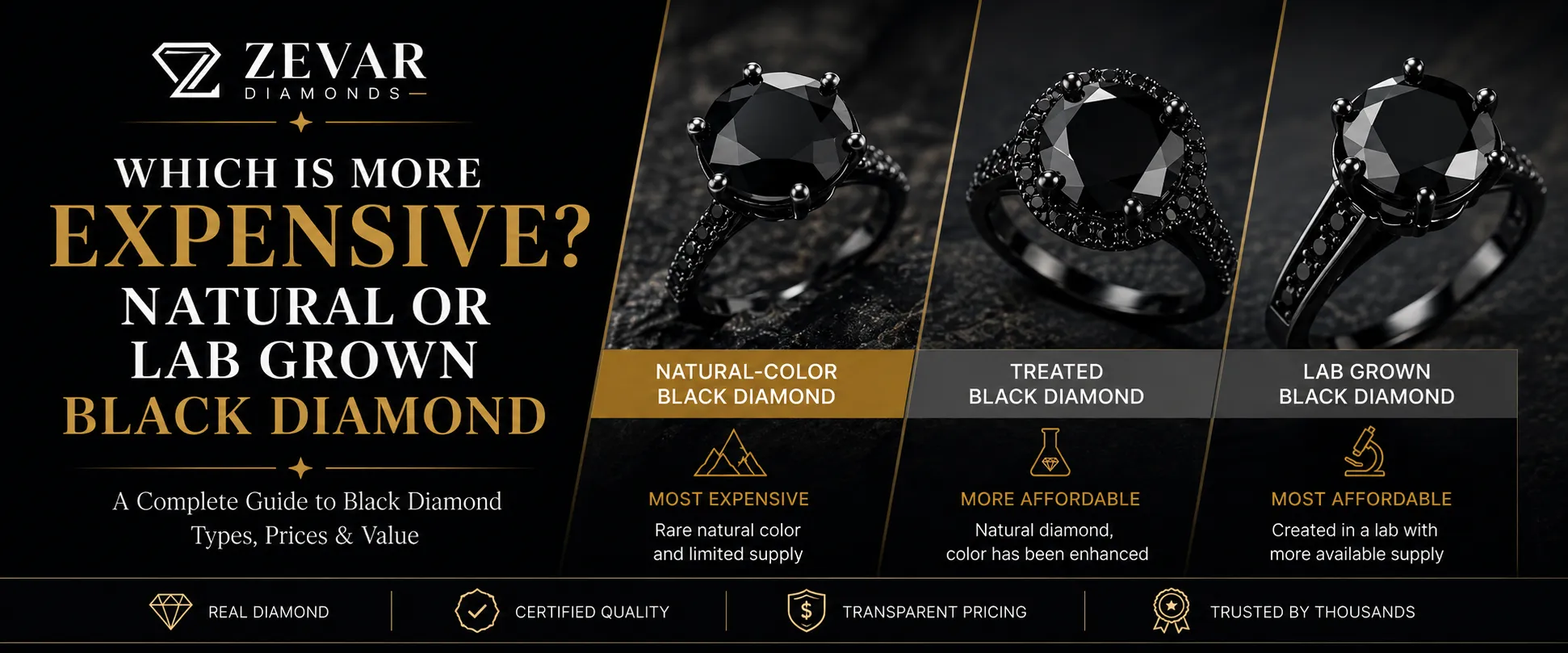
In most cases, natural black diamonds are more expensive than lab grown black diamonds because they are rarer and harder to source. However, there is an important detail buyers need to understand: not all black diamonds are the same.
There are three main types of black diamonds:
- Natural-color black diamonds
- Treated black diamonds
- Lab grown black diamonds
Natural-color black diamonds are usually the rarest and most expensive.
Treated black diamonds are natural diamonds that have been enhanced to appear black, so they are usually more affordable.
Lab grown black diamonds are created in a lab and are often the most budget-friendly option.
In this guide, we’ll explain the difference between these black diamond types, why prices vary, and how to choose the right option for your jewelry.
Quick Answer: Which Black Diamond Costs More?
Natural-color black diamonds are usually more expensive than lab grown black diamonds because they are naturally formed and much rarer.
Lab grown black diamonds are typically more affordable because they can be created in controlled laboratory environments.
Since the supply can be produced more easily, they do not carry the same rarity-based value as natural-color black diamonds.
Treated black diamonds are usually less expensive than natural-color black diamonds as well.
GIA explains that the opaque color of black diamonds may be caused by dark inclusions or, more commonly, by color treatment.
GIA also notes that a Colored Diamond Identification and Origin Report can confirm whether a black diamond’s color is natural or the result of treatment.
So, the general price order is:
Natural-color black diamonds are usually the most expensive. Treated black diamonds are more affordable. Lab grown black diamonds are usually among the most affordable options.
Why Natural Black Diamonds Are Usually More Expensive
Natural black diamonds are usually more expensive because of their rarity.
A natural-color black diamond gets its dark appearance from natural internal features, such as mineral inclusions and structural characteristics.
Unlike treated black diamonds, the color has not been artificially enhanced after mining.
That natural origin is what gives natural-color black diamonds stronger value.
Natural-color black diamonds are not as commonly available as treated black diamonds.
Many black diamonds sold in jewelry are treated to create a darker, more even appearance.
GIA states that most black diamonds are treated to become a very dark green that appears black.
This matters because buyers often see the word “black diamond” and assume every black diamond has the same value. That is not true.
A natural-color black diamond and a treated black diamond may look similar to the average buyer, but their value can be very different.
Natural, Treated, and Lab Grown Black Diamonds: What’s the Difference?
Before comparing prices, buyers need to understand the three main categories.
Natural-Color Black Diamonds
Natural-color black diamonds are diamonds that formed naturally underground and developed their dark appearance without artificial color treatment.
These diamonds are rare and can be more valuable because their color is natural.
They may not always have the perfectly even black appearance some buyers expect, but their value comes from natural origin and rarity.
Natural-color black diamonds are often preferred by collectors and buyers who care about authenticity, rarity, and long-term value.
Treated Black Diamonds
Treated black diamonds are natural diamonds that have gone through a treatment process to create or enhance their black appearance.
These diamonds usually start as lower-color or heavily included natural diamonds.
Through treatment, their color becomes much darker and more consistent.
Treated black diamonds can still be beautiful, but they are usually much less expensive than natural-color black diamonds because the color is not natural.
GIA notes that treated black diamonds are generally heavily fractured stones that may be subjected to high-temperature, low-pressure treatment, which can darken the appearance by graphitizing fractures.
For many jewelry buyers, treated black diamonds can be a practical choice because they offer the black diamond look at a more affordable price.
Lab Grown Black Diamonds
Lab grown black diamonds are created in a laboratory instead of being mined from the earth.
They are real diamonds, but their origin is different.
Because they can be produced in controlled environments, they are usually more affordable than natural-color black diamonds.
Lab grown black diamonds can be a good option for buyers who want the bold look of a black diamond without paying the premium for natural rarity.
However, they usually do not carry the same resale value or rarity appeal as natural-color black diamonds.
How Much Do Black Diamonds Cost?
Black diamond pricing can vary widely depending on origin, treatment, size, quality, seller, and certification.
As a general guide, natural-color black diamonds cost more than treated or lab grown black diamonds.
One diamond pricing guide lists treated black diamonds around $200–$400 per carat, while natural black diamonds are listed around $2,000–$3,000 per carat, depending on size.
These are general market examples, not fixed prices.
Here is a simple comparison:
| Type of Black Diamond | Typical Price Position | Why |
| Natural-color black diamond | Usually most expensive | Rare natural color and limited supply |
| Treated black diamond | More affordable | Natural diamond, but color has been enhanced |
| Lab grown black diamond | Usually most affordable | Created in a lab with more available supply |
The most important thing is not just the price. It is knowing what type of black diamond you are actually buying.
A low-priced black diamond may still be beautiful, but buyers should confirm whether it is natural-color, treated, or lab grown.
Are Lab Grown Black Diamonds Real Diamonds?
Yes, lab grown black diamonds are real diamonds if they are made of diamond material and created using diamond-growing technology.
They are not the same as cubic zirconia, glass, or other diamond simulants.
The main difference between a natural black diamond and a lab grown black diamond is origin. Natural diamonds form underground over long periods of time. Lab grown diamonds are created in controlled environments.
This difference affects price, rarity, and resale value.
A lab grown black diamond may look beautiful in jewelry, but it usually does not carry the same rarity-based value as a natural-color black diamond.
Are Treated Black Diamonds Natural Diamonds?
Yes, treated black diamonds can be natural diamonds, but their black color has been enhanced.
This is where buyers need to be careful.
A treated black diamond may have been mined from the earth, but if the color was created or enhanced through treatment, it is not the same as a natural-color black diamond.
That difference can affect value.
For example, a treated black diamond may be more affordable and visually attractive, but a natural-color black diamond is usually rarer and more valuable.
This is why the product description and certificate matter.
A black diamond should not simply be described as “natural” without explaining whether the black color is natural or treated.
Why Certification Matters for Black Diamonds
Certification is very important when buying black diamonds.
With white diamonds, buyers usually focus on the 4Cs: cut, color, clarity, and carat. With black diamonds, origin and treatment become especially important.
A certificate or report can help confirm whether the diamond is:
- Natural-color
- Treated
- Lab grown
GIA states that its Colored Diamond Identification and Origin Report can confirm whether a diamond’s color is natural or caused by treatment.
This is important because two black diamonds may look similar but have very different values.
Without proper disclosure, a buyer may pay a natural-color price for a treated stone. That is the mistake you want to avoid.
Before buying a black diamond, ask:
- Is the diamond natural, treated, or lab grown?
- Is the black color natural or enhanced?
- Does it come with a grading report?
- Is the origin clearly disclosed?
- What is the return or exchange policy?
A trustworthy jeweler should answer these questions clearly.
Natural vs Lab Grown Black Diamond: Which Should You Buy?
The better choice depends on your budget, your style, and what matters most to you.
Choose a Natural-Color Black Diamond If You Want Rarity
A natural-color black diamond may be the better choice if you care about rarity, natural origin, and long-term value.
This option is usually best for buyers who want something more unique and are comfortable paying a higher price.
Natural-color black diamonds are often chosen for special pieces, collector-style jewelry, and designs where rarity matters.
Choose a Treated Black Diamond If You Want the Look for Less
A treated black diamond may be a good choice if you want the black diamond look at a more affordable price.
This is a common option in fashion jewelry and many black diamond rings.
It can still look beautiful, but buyers should understand that the color has been enhanced.
The key is transparency. Treated black diamonds are not bad, but they should be sold honestly.
Choose a Lab Grown Black Diamond If You Want Affordability
A lab grown black diamond may be the right choice if you want a real diamond with a bold black look at a lower price.
This can be a good option for buyers who care more about appearance, budget, and modern diamond alternatives than rarity or resale value.
Lab grown black diamonds can work well for engagement rings, everyday jewelry, and custom designs where the look matters more than long-term value.
Do Natural Black Diamonds Hold Value Better?
Natural-color black diamonds usually have better value potential than lab grown or treated black diamonds because they are rarer.
However, that does not mean every natural black diamond is a guaranteed investment.
Value depends on several factors, including:
- Whether the color is natural
- Certification
- Size
- Overall appearance
- Market demand
- Seller reputation
- Buyer interest
Treated and lab grown black diamonds are usually purchased more for beauty and style than resale value.
If long-term value matters to you, natural-color with proper certification is usually the stronger choice.
Are Black Diamonds More Expensive Than White Diamonds?
Not always.
Black diamonds can be less expensive than high-quality white diamonds, especially if the black diamond is treated.
Natural-color black diamonds can be expensive because they are rare, but many treated black diamonds are more affordable than traditional white diamonds.
This is another reason pricing can be confusing.
A buyer may see one black diamond at a very low price and another at a much higher price.
The difference often comes down to whether the diamond is treated, natural-color, or lab grown.
Final Thoughts: Which Is More Expensive?
Natural-color black diamonds are usually more expensive than lab grown black diamonds because they are rarer and harder to source.
But buyers should not stop there.
The most important thing is understanding the type of black diamond being offered.
A natural-color black diamond, a treated black diamond, and a lab grown black diamond can all look dark and beautiful, but they do not have the same value.
Here is the simple breakdown:
Natural-color black diamonds are usually the most expensive because they are rare. Treated black diamonds are usually more affordable because their color has been enhanced. Lab grown black diamonds are usually among the most affordable because they are created in a lab.
At Zevar Diamonds, our goal is to help buyers choose jewelry with confidence.
Whether you prefer the rarity of a natural-color black diamond, the affordability of a treated black diamond, or the modern appeal of a lab grown black diamond, the right choice depends on your budget, your style, and the meaning behind the piece.